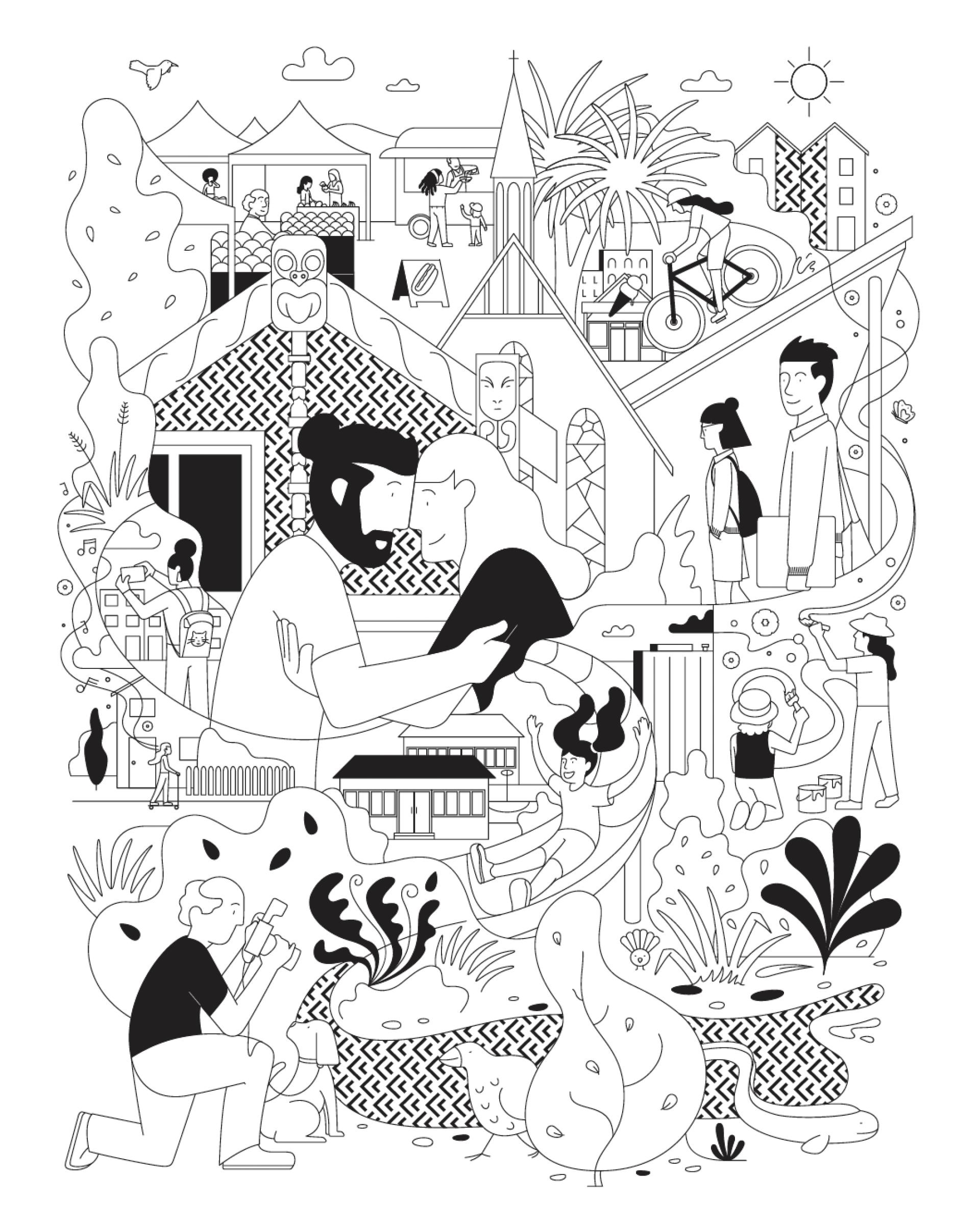
The gift of our name: Te Rā Nui
In 2019, we started a conversation to understand our community’s values, needs and aspirations. Feedback helped us create our spatial plan, which we shared at Hui Tahi Tātou o Porirua over May and June 2023 to make sure we got it right.
What you told us
Here’s what you shared with us at Hui Tahi Tātou o Porirua in 2023.
Hui Tahi Tātou o Porirua, our community engagement event, ran from May to June, 2023. We’re sharing that feedback here as part of Phase 2: Whakaata – round back to community with what we heard and share how all of the feedback the project received over the last five years (particularly in 2019) has been incorporated into project plans and initiatives.
Our spatial plan sets the direction for how eastern Porirua (Rānui, Cannons Creek, Waitangirua and Ascot Park) will develop and change over the next 20 years. It represents the wants, needs and aspirations of the community, landowners, iwi and government.
There are seven key focus areas in the spatial plan. Each has a list of potential actions for Te Rā Nui to either support or deliver.
Below is a summary of community feedback provided during Hui Tahi Tātou o Porirua on the spatial plan – the overwhelming response was “you heard us”.
Community feedback on the spatial plan:
1. Local Identity
Local identity is key to the delivery of all spatial plan focus areas.
- Consider different cultures when developing and delivering work programmes.
- Protect and restore spaces valued by the community.
- Spaces should incorporate culture, promote social connectivity and celebrate diversity.
2. The Environment
Project and community action are key to delivering environmental outcomes.
- More native trees and gardens.
- Clean and safe waterways.
- Improve green spaces, lakes and parks.
3. Resilient and sustainable development
This is priority - especially waste, waterway restoration and stormwater issues.
- Local people should gain jobs and skills through the project.
- Cultural and community input will bring indigenous knowledge to help achieve outcome.
4. Better connections
Safety upgrades are vital for connections- lighting, road design, traffic calming, pedestrian crossings and accessibility.
- More frequent and reliable public transportation.
- Greater access to alternative modes of transport - more community-led support will encourage more use of these modes.
5. Vibrant centres
This is the greatest opportunity to unlock aspirations and build social connection and cohesion.
- More local, cultural and food shops.
- More arts, community and cultural spaces.
- Improved and increased social services and community amenities.
- More jobs and skills pathways.
- More markets and events.
6. Neighbourhoods
The community wants to be and have good neighbours.
- More interventions to address safety issues, disruptive behaviour and noise concerns.
- Increase community participation in environmental improvements and stewardship.
- Increase local amenities and businesses for greater social connections.
7. Homes
Greater affordability and pathways to home ownership.
- More homes to be safe, warm and dry.
- Different types of houses to cater for larger families, multicultural living and those experiencing accessibility issues.
- Options for those experiencing homelessness.
Your feedback on our other plans
When we got feedback on our spatial plan, we also asked for your views on our other projects.
During Hui Tahi Tātou o Porirua, we also sought further information to help inform our Transport Plan, Neighbourhood Masterplans, and Outcomes Monitoring and Evaluation Framework.
These are the key points raised by the community:
Transport Plan
- Need to see progress on a better transport network.
- Safety and maintenance issues are barriers to getting around and using alternative modes of transport.
- More reliable and affordable transportation options are needed.
Neighbourhood Masterplans
- It’s good to see these plans and get a better understanding of specifics for each neighbourhood.
Outcomes Monitoring and Evaluation Framework
- The overarching vision and focus areas to enable community wellbeing are on the right track.
- This is a good next step in the engagement process and will strengthen the opportunity for change and investment to meet community aspirations.
What are the next steps?
We’ve continued to work on our other important plans for the area.
Transport Plan
We’re working with Waka Kotahi, Porirua City Council, Ngāti Toa Rangatira and Greater Wellington Regional Council to identify what transport improvements need to be made, how much it will cost, and to create a business case for funding. After that, we’ll be able to share details of what’s happening and when.
Outcomes Monitoring and Evaluation Framework (OMEF)
As a result of information gathered, Kāinga Ora has created and will be leading the Eastern Porirua Community Survey, with support from Te Rā Nui partners Porirua City Council and Ngāti Toa Rangatira, as well as Te Pae Whakahou Hapori and support agencies. This will collect feedback on what eastern Porirua is like now, so we can track community wellbeing over the next 20 years. The first survey was completed in February 2024. The survey will run every four years to show how Te Rā Nui is helping to improve wellbeing in eastern Porirua.
Click here to learn more about the 2024 Eastern Porirua Community Survey.
Community Engagement Report Hui tahi tātou o Porirua May – June 2023
Below is a copy of the community engagement report.
Community Engagement Report Hui tahi tātou o Porirua May – June 2023